
Hallo,
Manchmal verändert sich die Welt nicht durch neue Geräte oder sichtbare Erfindungen, sondern durch Systeme, die still im Hintergrund arbeiten. Foundation Models - die großen lernenden Maschinen hinter Tools wie ChatGPT, Claude oder Gemini - sind längst zu einer unsichtbaren Infrastruktur geworden. Sie schreiben, analysieren, übersetzen, entscheiden : leise, aber überall.
Die entscheidende Frage lautet also nicht mehr, ob wir diese Systeme nutzen, sondern wie. Wie gestalten wir eine Zukunft, in der maschinelle Intelligenz uns nicht nur effizienter macht, sondern neue Räume für Urteilskraft, Kreativität und Verantwortung öffnet?
Hello,
Sometimes the world doesn’t change through new devices or visible inventions, but through systems quietly working in the background. Foundation models - the large learning machines behind tools like ChatGPT, Claude, or Gemini - have become an invisible infrastructure. They write, analyze, translate, decide: silently, yet everywhere.
So the real question is no longer if we use these systems, but how. How do we shape a future in which machine intelligence doesn’t just make us more efficient, but expands our capacity for judgment, creativity, and responsibility?
Systeme unter Spannung
Foundation Models verändern die Welt nicht durch laute Revolutionen, sondern durch leise Umbrüche im Hintergrund. Sie greifen in Entscheidungsprozesse, Kommunikation und Wissensstrukturen ein – und verschieben dabei, oft unbemerkt, unser Verständnis von Verantwortung und Gestaltung.
Systems under Pressure
Foundation models are transforming the world not through loud revolutions, but through quiet shifts beneath the surface. They shape decision-making, communication, and knowledge – often without us noticing. With this invisible power comes responsibility: to understand, adapt, and stay in control of what we’ve built.

Dialog
Was wir für sicher hielten, wankt. Wer heute Verantwortung trägt, muss neu denken. In „Dialog“ holen wir Stimmen ins Spiel, die den Status quo infrage stellen - pointiert, unbequem, ehrlich.
In unserem neuen „Dialog“ sprechen wir mit Susanne Peick vom polis Magazin für Urban Development & der polis Convention über aktuelle Themen rund um Stadtentwicklung und Zukunft des urbanen Raums.
Dialogue
What once felt certain is shifting. Those who lead today must rethink. In “Dialog”, we bring in voices that challenge the status quo - pointed, uncomfortable, honest.
In our new “Dialog”, we speak with Susanne Peick from polis Magazin für Urban Development & polis Convention about current topics in urban development and the future of urban spaces.
Zum Interview | To the interview
Questionnaire
Newsletter lesen ist eine Sache. In einen Dialog zu treten, ist eine andere - eine bessere Sache.
Diesmal geht es um den Newsletter selbst. Ziel ist es, Denkanstöße zu geben – nicht Überlänge zu produzieren. Deshalb die Frage: Wie relevant, zugänglich und anregend sind die Inhalte wirklich? Nach all den offenen Fragen zur Zukunft der Systeme interessiert uns nun die eigene Perspektive der Lesenden.
Die Eingaben werden rein intern verwendet, ausgewertet - und in einer der nächsten Ausgaben aufgegriffen. Dauer: maximal drei Minuten.
Reading a newsletter is one thing. Entering into a dialogue is another -and a better one.
This time, the focus is on the newsletter itself. The goal is to inspire thought – not to overwhelm. The question is: how relevant, accessible, and engaging does the content feel?
After all these questions about the future of systems, it’s time to hear the readers’ perspective.
Submissions are used internally, analyzed, and - reflected in future editions. Time needed: max three minutes.
#nxtKNOWLEDGE Forum
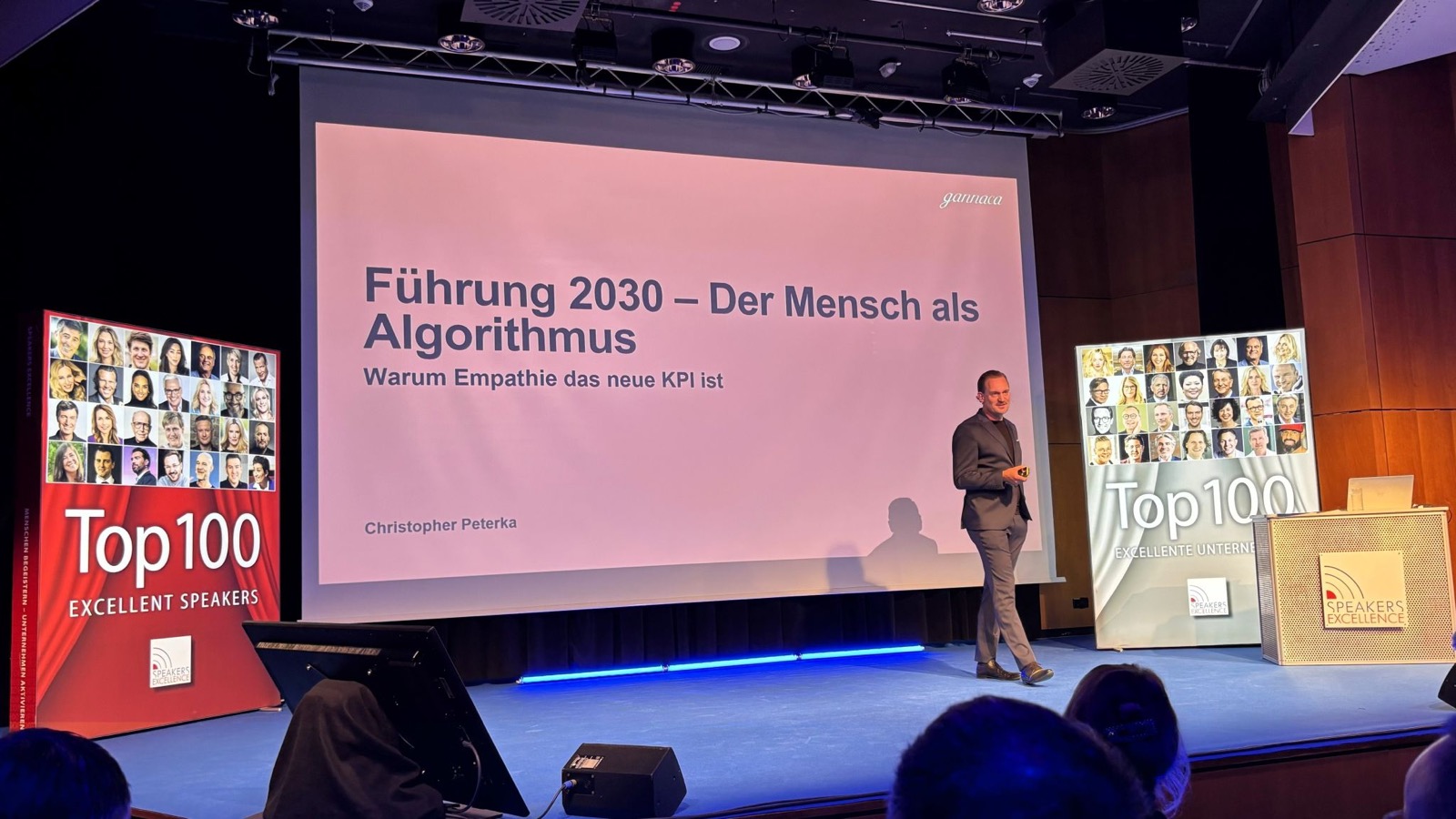
Im Rahmen des #nxtKNOWLEDGE Forums sprach Christopher Peterka über das Thema „Führung 2030 – Der Mensch als Algorithmus“. Im Mittelpunkt stand die Frage, wie sich Führung verändert, wenn Organisationen zunehmend datenbasiert denken und handeln – und warum Empathie dabei zur entscheidenden Kennzahl wird.
Der Vortrag zeigte, dass die Zukunft von Führung nicht allein durch Technologie geprägt wird, sondern durch die Fähigkeit, menschliche Werte in systemische Prozesse zu integrieren. Empathie wird damit nicht zum Gegensatz von Effizienz, sondern zu ihrem Maßstab.
#nxtKNOWLEDGE Forum
As part of the #nxtKNOWLEDGE Forum, Christopher Peterka spoke on “Leadership 2030 – The Human as Algorithm.” His talk explored how leadership evolves as organizations increasingly rely on data-driven systems – and why empathy is becoming a key performance indicator.
The presentation highlighted that the future of leadership will not be defined by technology alone, but by the ability to embed human values into systemic processes. Empathy, in this context, is not the opposite of efficiency but its new measure.